
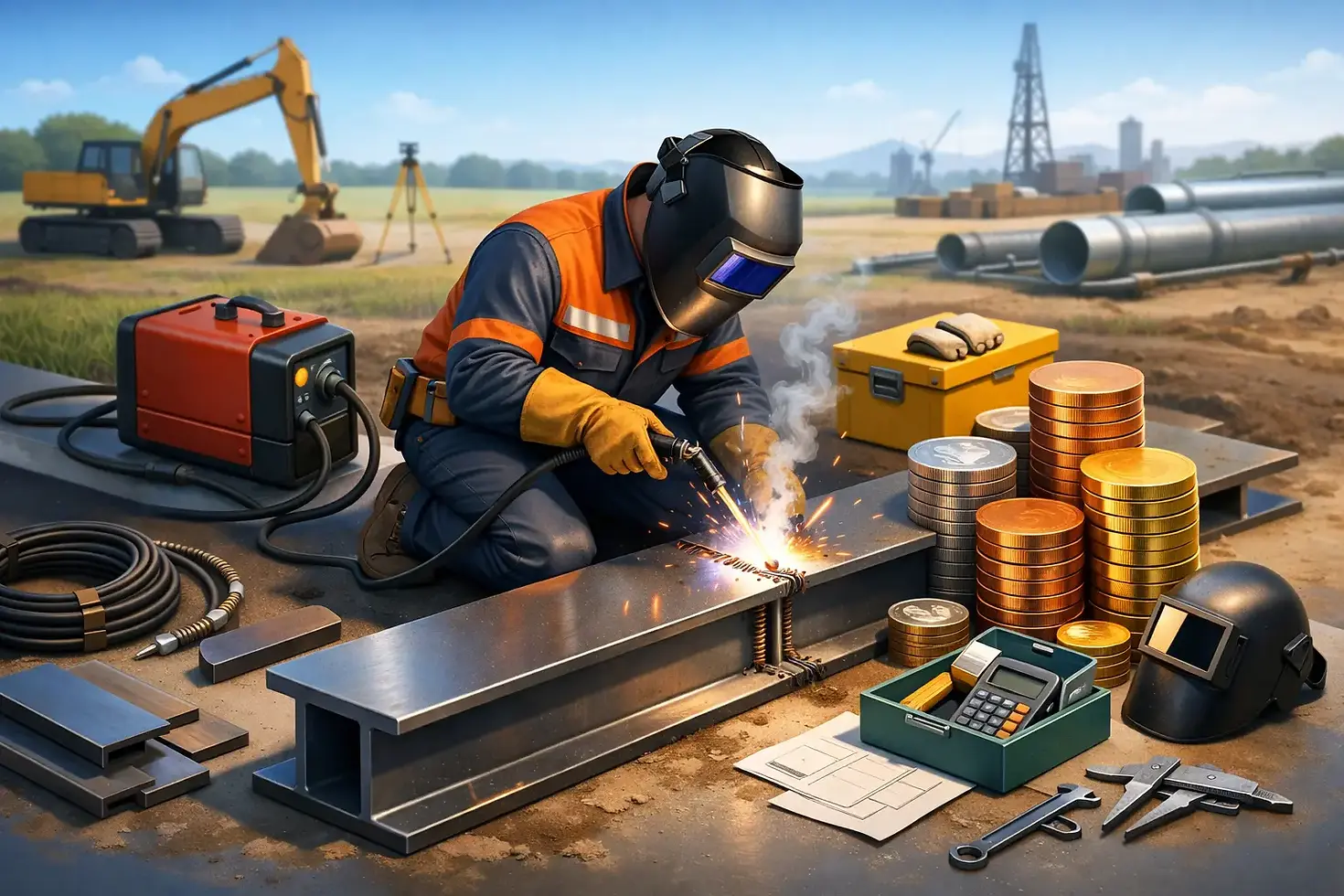
Field Welding Pricing: What Your Job Really Costs
A cracked trailer tongue, failed equipment bracket, or loose railing can stop work long before the actual weld begins. Field welding pricing reflects what it takes to get a qualified, insured welder and the right equipment to your location, assess the condition, prepare the metal, and complete a repair that holds up under real use.
The lowest number is not always the lowest-cost decision. A repair that gets equipment moving again, prevents a safety issue, or avoids transporting a heavy item to a shop can save far more than it costs. At the same time, a clear estimate matters. Knowing what drives the price helps you decide whether mobile service, a scheduled repair, or a shop drop-off makes the most sense.
How Field Welding Pricing Is Built
Most on-site welding jobs are priced around a combination of service time, travel, labor, materials, and job complexity. The exact mix depends on the work, but these factors are the reason two repairs that look similar from a distance may have very different estimates.
A mobile welder has to bring the capability of a welding shop to the jobsite. That can include a welding machine, leads, generators, cutting and grinding tools, safety equipment, electrodes or wire, shielding gas, clamps, and fabrication materials. Setup and breakdown are part of the work, especially when the repair is on a worksite, in a yard, or on equipment that cannot be moved easily.
Travel also matters. A job nearby with straightforward site access takes less time to reach and complete than one involving a longer drive, difficult access, or a remote location. Travel charges are not simply about mileage. They account for the time the welding rig and operator are committed to getting to the job and back.
Then there is the repair itself. A clean crack in accessible steel may require preparation, welding, and finishing. A damaged component that is bent, rusted through, contaminated with oil, or cracked in multiple places can require cutting, grinding, reinforcing, fitting new steel, and more than one welding pass. The repair has to address the cause of the failure when possible, not just cover it with weld metal.
The Biggest Factors That Affect Your Estimate
The condition of the metal is often the first major variable. Fresh, clean steel is easier to work with than heavily corroded, painted, galvanized, or oil-soaked material. Surface preparation is necessary for sound welds, and badly rusted metal may need to be removed and replaced rather than repaired.
Access is equally important. A component at ground level with room to work around it is different from a connection under a machine, behind a guard, high on a structure, or located where equipment must be repositioned. If the welder needs to work overhead, in a tight area, or around sensitive materials, the job will take more planning and care.
Material thickness and weld position affect labor time as well. Thin metal can burn through if it is not handled correctly. Thick steel may require beveling, preheating, and multiple weld passes to achieve proper strength. Structural connections and load-bearing repairs require more attention than a noncritical cosmetic fix because the consequences of failure are greater.
Custom fabrication changes the scope further. A replacement bracket, gusset, hinge, gate section, equipment mount, or reinforcement plate may need to be measured, cut, fitted, and welded on site. If a part must be made before the service visit, the estimate should account for design time, materials, shop fabrication, and installation.
Mobile Service Versus a Shop Repair
Mobile welding is often the right value when moving the item is difficult, costly, or unsafe. A disabled skid steer, trailer, steel stair, commercial gate, dumpster, or fixed structural component is not always practical to transport. On-site work avoids towing, disassembly, loading, and the downtime of waiting for a shop opening.
However, an appointment-based shop drop-off can be more economical for smaller, movable items. A loose metal chair frame, compact bracket, hand tool, small gate part, or detached component may be less expensive to repair in a controlled shop setting. There is no mobile travel or on-site setup, and the work can sometimes be completed more efficiently.
The decision comes down to total cost, not just the hourly rate. Ask what it would take to remove and transport the item, how long the equipment will be out of service, and whether the repair needs to happen where the component sits. For many commercial and industrial customers, mobile work is the practical choice because it reduces disruption.
Why Emergency Welding Costs More
An urgent failure rarely happens at a convenient time. When a broken weld holds up a crew, creates a safety concern, or leaves critical equipment unusable, waiting for a standard appointment may not be an option. Emergency field welding pricing typically reflects the need for a faster response, schedule disruption, and possible after-hours or weekend service.
That added cost should be weighed against the cost of downtime. If a contractor has a crew and rented equipment waiting, a quick repair may protect the day’s work. If a gate, railing, or metal barrier has become unsafe, prompt service can help reduce exposure while a permanent repair is completed.
Emergency service is not a substitute for routine maintenance. Repeated cracking, loose hinges, worn mounts, and deteriorated supports are often less expensive to address before they become a failure. Still, when an urgent repair is needed, the goal is to respond promptly and perform work that is appropriate for the condition and use of the item.
What a Good Welding Estimate Should Cover
A useful estimate explains the work in practical terms. It should identify whether the job involves a repair, reinforcement, replacement section, or custom fabrication. It should also make clear whether travel, materials, and emergency response are part of the price or billed separately.
Not every job can be priced exactly from a photo. Photos are helpful for an initial conversation, but hidden cracks, corrosion, distorted parts, and poor access can change the scope once the work is inspected in person. For that reason, some repairs are best handled with a service minimum and labor-based pricing after an on-site assessment.
Be cautious with a quote that promises a structural repair for an unusually low price without asking about the equipment, material, damage, or location. Welding is not only the time spent running a bead. Proper preparation, fit-up, reinforcement, and cleanup are what help the repair perform safely.
How to Help Get an Accurate Price Before the Visit
A few details can make the estimating process faster and more accurate. Share clear photos from several angles, including a wider photo that shows the surrounding work area. Explain what failed, whether the item is still usable, and whether there is visible bending, rust, or missing material.
It also helps to provide the location, site access details, and any timing requirements. Let the welder know if the repair is on a trailer, heavy equipment, structural steel, a railing, a gate, or another specific item. If you know the material thickness or have replacement parts on hand, include that information, but do not worry if you do not. A professional inspection can determine what is needed.
Before work starts, ask whether the repair is intended as a temporary return-to-service fix or a longer-term solution. Sometimes the best answer is a quick repair to keep operations moving, followed by scheduled fabrication or replacement when time allows. Being clear about the equipment’s use, loads, and safety requirements helps guide the recommendation.
Price, Safety, and Long-Term Value
The right repair is not always the fastest weld placed over a crack. If a bracket broke because it lacks support, a reinforcement plate or gusset may cost more initially but prevent the same failure from happening again. If corrosion has weakened the surrounding metal, replacing a section may be safer than trying to weld onto thin material.
CSG Welding approaches on-site work with that practical view: get the job assessed honestly, explain the repair options, and complete the work with care. For property owners and equipment operators across Rhode Island and nearby service areas, that means a direct path from a damaged component to a workable repair plan.
When requesting field service, focus on the value of getting the right work done at the right time. A clear description, good photos, and honest information about urgency give you the best chance of receiving a realistic estimate and a repair that keeps your equipment or structure doing its job.


Comments